We use cookies to make your experience better. To comply with the new e-Privacy directive, we need to ask for your consent to set the cookies. Learn more.

Success with Single-Source Solutions
Sep 2026 Nicole Jones
Why You Win with Single-Source Components and Customization Services
In the fast-paced world of machine design, OEMs and design engineers face a constant balancing act: optimizing performance while driving down costs and production timelines.
When building a complex motion control system, it is easy to fall into the trap of sourcing motors from Vendor A, drivers from Vendor B, and gearboxes from Vendor C, and so on just to save a few dollars upfront. However, this fragmented approach often introduces hidden technical friction, logistics headaches, and prolonged development cycles.
By consolidating your acquisition process and sourcing all machine components from a single provider - while also leveraging custom and value-added options - engineering teams can eliminate compatibility issues, decrease overall manufacturing costs, and drastically speed up time-to-market.
Here are the top three reasons why engineers and OEMs find success by partnering with a single-source automation component provider.
1. Seamless System Integration and Reduced Engineering Risk
When sourcing motion control components from multiple vendors, engineers frequently face integration bottlenecks. Mismatched wiring layouts, incompatible communication protocols, and mismatched voltage tolerances can stall a project before it even leaves the test bench.
The Single-Source Advantage
Sourcing from a single provider ensures that mechanical and electronic automation designs are fully coordinated from day one.
The Value-Added Benefit
Utilizing pre-packaged and vetted systems drastically reduces (or even eliminates) the trial-and-error phase of wiring and software pairing. For instance, pairing a motor with its matching pre-tuned driver and controller guarantees absolute closed-loop tracking right out of the box, significantly decreasing technical risk.
2. Tailored Customization Without In-House Overhead
All machine designs come with unique structural, environmental, or spatial constraints. Standard off-the-shelf components rarely fit perfectly without some level of modification. Many OEMs, however, lack the specialized tooling or engineering bandwidth to modify components in-house.
Targeted Modifications
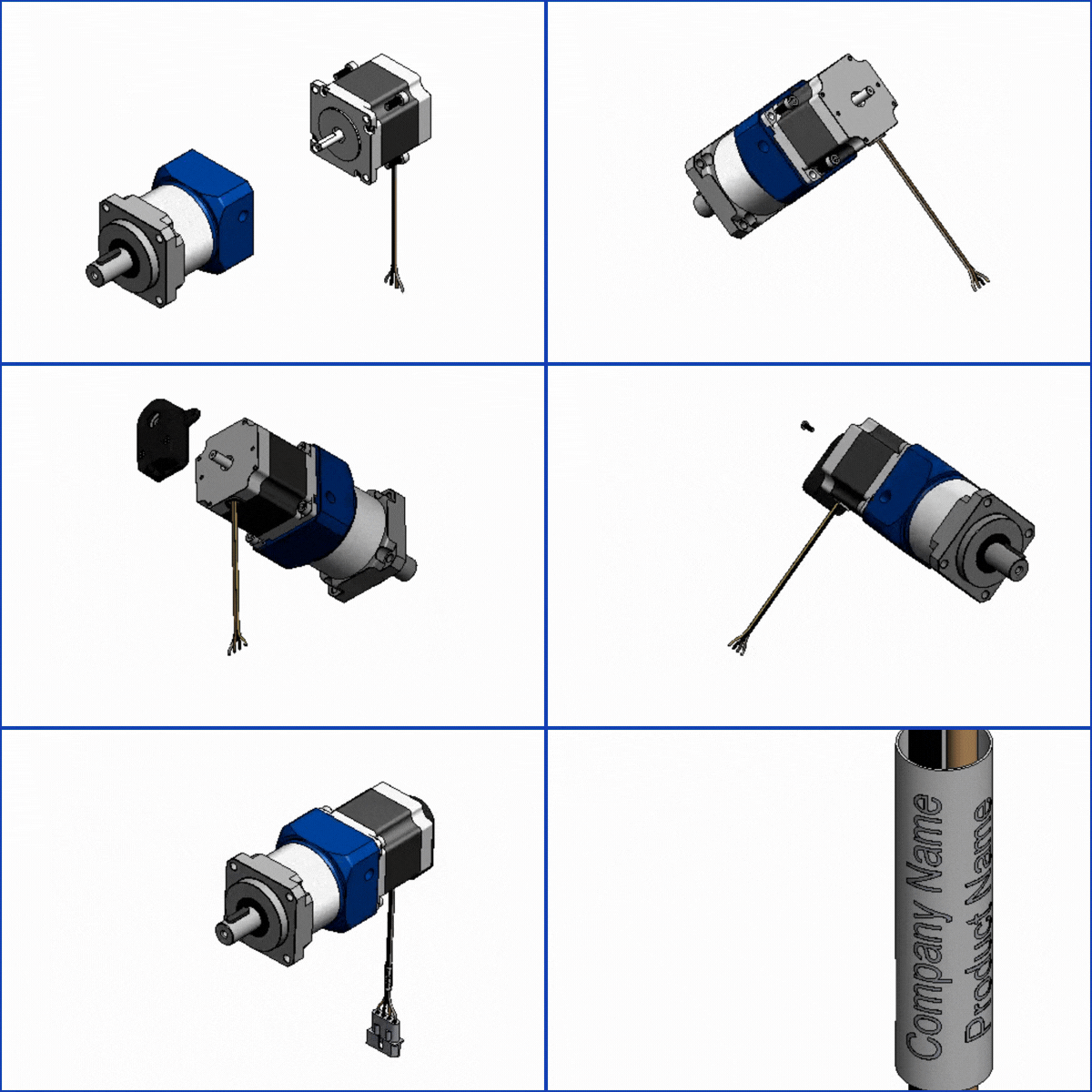
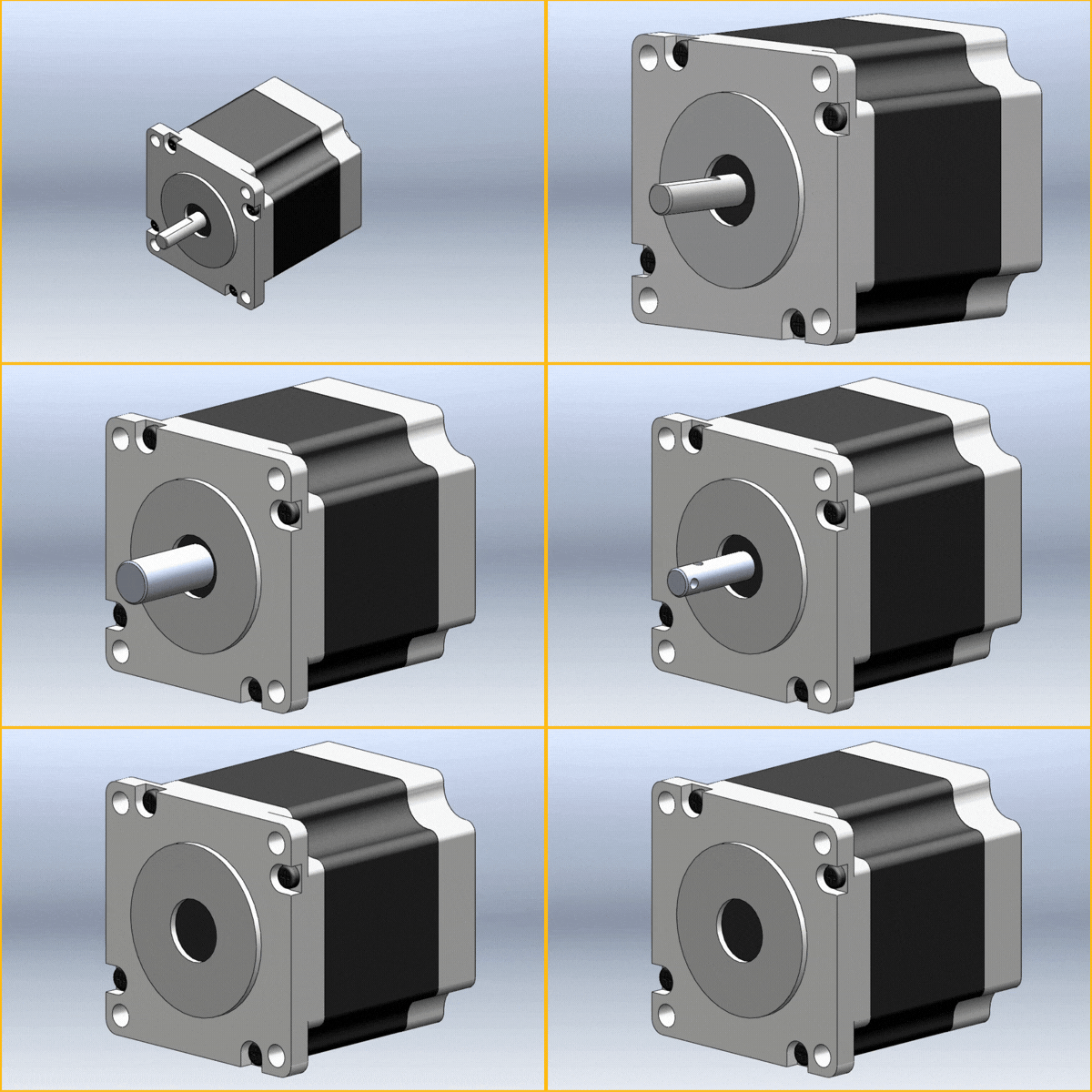
Partnering with a manufacturing supplier that offers customization and value-added services allows engineers to specify exact motor shaft modifications, unique gearbox mounting configurations, special windings optimized for exact power footprints, and more.
Application Readiness
Rather than modifying a standard component post-purchase, manufacturers can request integrated add-ons like fail-safe brakes, high-resolution encoders, special seals for IP65 protection, or application-specific lubricants to name a few. Components arrive at your facility precision-tailored to your specifications without driving up your internal R&D overhead.
3. Accelerated Production Dynamics and Lower Supply Chain Costs
Managing individual purchase orders, tracking separate lead times, and coordinating logistics from multiple vendors strains procurement resources and leaves your production schedule vulnerable to unexpected vendor delays.
Plug-and-Play Assembly
Having a single provider handle value-added assembly - such as custom cabling, connector integration, mounting gearboxes and encoders to motors - saves critical production minutes on your assembly floor.
Procurement Efficiency
Transitioning to a single-source ecosystem simplifies vendor management down to one point of contact. This setup allows you to maximize volume-based quantity discounts, shortens the overall production lifecycle, and ensures that the entire motion system is covered under a unified, hassle-free warranty.
Industry-Specific Impact: Packaging, Biomedical, and Semiconductors
While single-source procurement optimizes manufacturing across automation industries, Anaheim Automation's targeted customization services and value-added capabilities deliver critical, specialized advantages for high-performance industries.
Packaging and Labeling
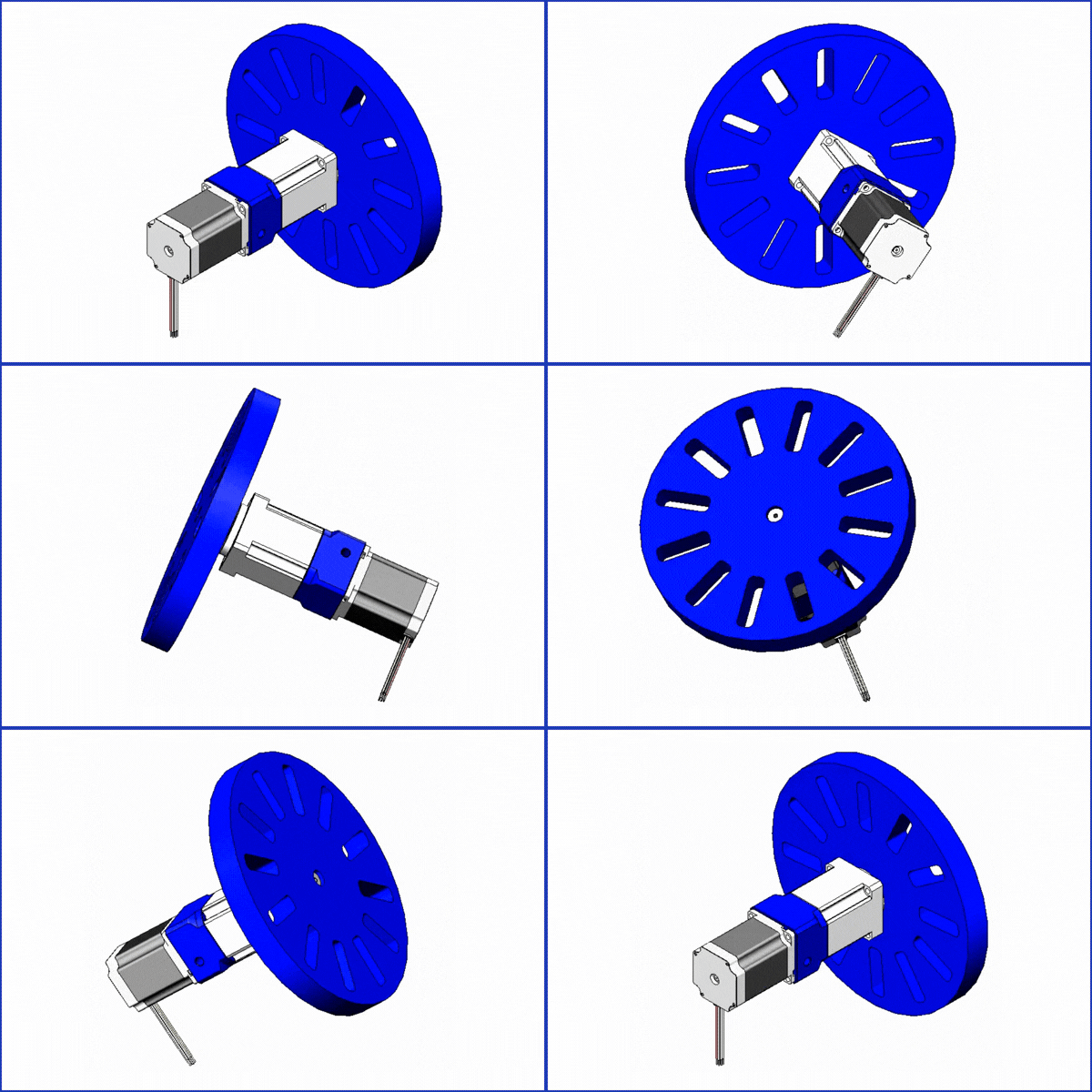
High-speed sorting, filling, and labeling machinery requires precise synchronization and rugged durability. Value-added services, such as pre-mounting planetary gearboxes for high torque capacity or applying specialized IP-rated sealing, ensure components withstand washdowns and continuous high-throughput demands without losing indexing precision.
Biomedical and Lab Testing
In medical automation, space is tightly restricted and contamination of any kind is unacceptable. Anaheim Automation addresses these strict limitations by integrating motors, drivers, gearboxes, encoders, and other components to minimize footprint. Specialized greases and lubricants can also be utilized to preserve sterile testing environments.

Semiconductor Manufacturing and Testing
Sub-micron precision, smooth low-speed motion, and vacuum compatibility are common requirements for silicon wafer processing. Customization options like specialized motor windings to eliminate cogging torque, alongside vacuum-prepped component assemblies, provide semiconductor OEMs with the extreme accuracy needed for handling delicate materials.

The Bottom Line
For today's OEMs and design engineers, speed and reliability are paramount. Consolidating your component sourcing and taking advantage of value-added factory modification and custom design services shifts the heavy lifting of integration and assembly back to the component experts. The result? A more reliable machine, a streamlined supply chain, and a faster path to commercial success.