The store will not work correctly when cookies are disabled.
We use cookies to make your experience better.To comply with the new e-Privacy directive, we need to ask for your consent to set the cookies. Learn more.
Types of Industrial Gearmotors: Stepper, BLDC, Brush DC & AC Explained
Types of Industrial Gearmotors: Stepper, BLDC, Brush DC & AC Explained
Mar 2026 Nicole Jones
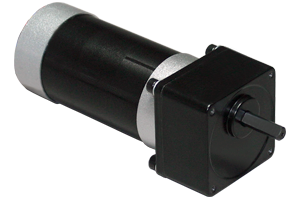
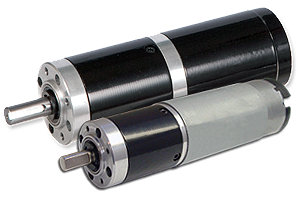
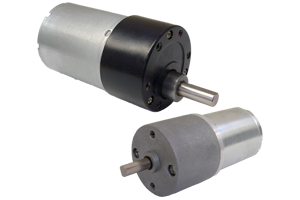
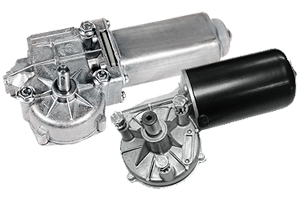
In industrial automation and motion control systems, gearmotors play a critical role in converting electrical energy into controlled mechanical motion. A gearmotor combines an electric motor with a fully integrated gearbox to increase torque, reduce output speed, and improve mechanical efficiency for demanding applications. By integrating the gearbox and motor into a single unit, gearmotors simplify installation, reduce mechanical complexity, and often improve reliability.
At Anaheim Automation, we offer a wide selection of gearmotor technologies, including Stepper, Brushess DC (BLDC), Brush DC, and AC gearmotors, to meet the needs of OEMs, system integrators, and machine builders across a variety of industries. Each motor and gearbox type offers unique advantages depending on the application's requirements for precision, cost, torque, efficiency, and control.
Stepper Gearmotors
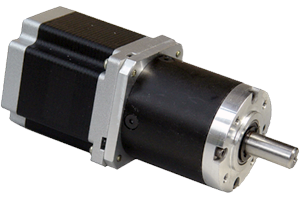
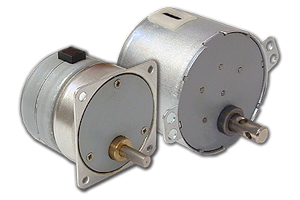
Stepper gearmotors combine a stepper motor with a gearbox to deliver precise incremental motion with increased torque. Stepper motors divide rotation into discrete steps and can often operate in open-loop systems without requiring a feedback device such as an encoder. Stepper gearmotors are ideal for positioning and indexing applications that require high torque and low speeds. We offer stepper motors in multiple NEMA frame sizes, with a broad range of gear ratio options.
Stepper Motors with Planetary Gearboxes
Motor Sizes: NEMA 11, 17, 23, and 24
Torque: Up to 10,000 oz-in
Cost-Effective, High-Torque, Compact Package
Available in 5 Stack Lengths
Choose from 14 Gear Ratios
Customization and Value-Added Accessories Available
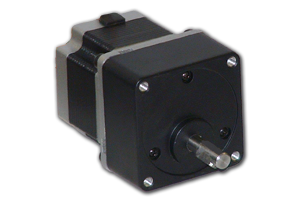
Stepper Motors with Spur Gearboxes
Motor Sizes: NEMA 23 and 24
Torque: Up to 3,500 oz-in
Cost-Effective, Compact Solution
Customization and Value-Added Accessories Available
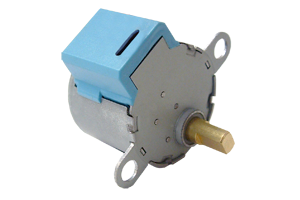
PM Stepper Motors with Spur Gearboxes
Motor Sizes: 24 - 42mm Diameter
Torque: 300 - 4,000 g-cm
Round-Bodied PM Step Motor with Spur Gearbox
Precise Motion, Low Cost
Customization Available
Possible MOQ Requirement
Type
Advantages
Disadvantages
Common Applications
Stepper Motors with Planetary Gearboxes
High torque density in a compact footprint
Efficient torque transmission
Reduced backlash compared to spur gearboxes
Wide gear ratio range
Higher cost than spur gearboxes
Slightly more complex mechanical design than a direct-drive motor alone
CNC machinery
Robotic arms
Indexing tables
Semiconductor equipment
Pick-and-place machines
Stepper Motors with Spur Gearboxes
Simple and economical design
Good efficiency
Wide range of gear ratios
Higher backlash compared to planetary gearboxes
Lower torque density
Labeling machines
Automated dispensers
Small conveyors
Laboratory automation
Permanent Magnet Stepper Motors with Spur Gearboxes
Compact size
Low cost per unit
Good torque at low speeds
Lower power output than hybrid stepper motors
Reduced precision compared to larger stepper motors
Medical instruments
Office automation equipment
Camera positioning systems
Small robotics
Brushless DC Gearmotors
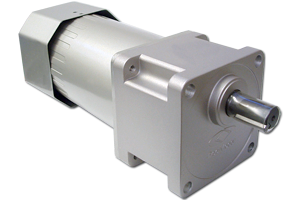
Brushless gearmotors combine a BLDC motor with a gearbox to deliver high efficiency, long service life, and excellent torque density. Unlike brushed DC motors, BLDC motors use electronic commutation instead of brushes, eliminating mechanical wear, reducing maintenance requirements, and allowing to unit to operate more quietly.
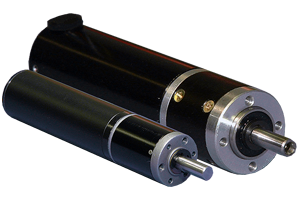
Brushless Motors with Planetary Gearboxes
NEMA Sizes: 09, 11, 17, and 23
Speeds: <500 - 15,000 RPM
Closed-Loop Control for Velocity Functions
Customization and Value-Added Accessories Available
Brushless Motors with Spur Gearboxes
NEMA Sizes: 23 and 34
Speeds: <225 - 11,000 RPM
Closed-Loop Control for Velocity Functions
Customization and Value-Added Accessories Available
Type
Advantages
Disadvantages
Common Applications
Brushless Motors with Planetary Gearboxes
High torque density
High efficiency
Low backlash
Long service life
Higher upfront cost
Requires electronic motor controller
Mobile robots, AGVs, AMRs
Industrial robotics
Automated warehouse systems
Conveyor systems
Semiconductor equipment
Brushless Motors with Spur Gearboxes
Lower cost than planetary systems
Efficient torque transmission
Relatively simple mechanical structure
Higher backlash compared to planetary gearboxes
Slightly lower torque density
Packaging equipment
Automated inspection systems
Light material-handling equipment
Brushed DC Gearmotors
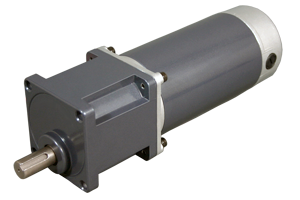
Brush DC gearmotors combine traditional brushed motors with gearboes to provide simple, cost-effective motion control solutions. These motors use brushes and a commutator to switch current through the motor windings. Although brush wear limits lifespan compared to BLDC motors, brushed gearmotors remain widely used due to their simplicity and low cost.
PM Brush DC Motors with Planetary Gearboxes
Input Voltage: 12 - 24 VDC
Frame Sizes: 22mm - 60mm
Continuous Torque: Up to 4,166 oz-in
Speed: Up to 1,350 RPM
Gear Ratio Options: 3.6:1 - 720:1
Customization and Value-Added Accessories Available
PM Brush DC Motors with Spur Gearboxes
Input Voltage: 6 - 24 VDC
Frame Sizes: 24mm - 83mm
Continuous Torque: Up to 2,750 oz-in
Speed: Up to 1,000 RPM
Gear Ratio Options: 3:1 - 3,000:1
Customization and Value-Added Accessories Available
PM Brush DC Motors with Worm Gearboxes
Input Voltage: 12 - 90 VDC
Frame Sizes: 48mm - 95mm
Continuous Torque: Up to 2,832 oz-in
Nominal Speed: Up to 240 RPM
Customization and Value-Added Accessories Available
High-Torque PM Brush DC Motors with Spur Gearboxes
Motor Sizes: 24 - 42mm Diameter
Torque: 300 - 4,000 g-cm
Round-Bodied PM Step Motor with Spur Gearbox
Precise Motion, Low Cost
Customization Available
Possible MOQ Requirement
Type
Advantages
Disadvantages
Common Applications
Permanent Magnet Brush DC Motors with Planetary Gearboxes
High torque output
Compact size
Efficient torque transfer
Higher cost than spur gear options
Brush wear still limits overall lifespan
Robotics
Electric mobility devices
Automated industrial equipment
Permanent Magnet Brush DC Motors with Spur Gearboxes
Economical solution
Simple control
Wide range
Higher backlash than planetary options
Lower torque density
Vending machines
Automated kiosks
Small conveyors
Permanent Magnet Brush DC Motors with Worm Gearboxes
Self-locking capability in many designs
High gear reduction ratios available
Compact right-angle configuration
Lower efficiency due to sliding contact in worm gears
Increased heat generation
Wear over time in high-load applications
Lifting mechanisms
Automated gates and doors
Positioning systems
High-Torque Permanent Magnet Brush DC Motors with Spur Gearboxes
Very high torque output
Strong starting torque
Cost-effective for heavy loads
Larger size compared to other DC gearmotor options
Reduced efficiency at high loads
Increased mechanical wear over time
Material handling systems
Industrial automation equipment
Lifting and actuation systems
AC Gearmotors
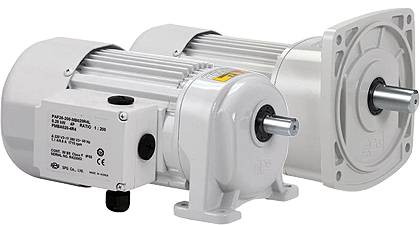
AC gearmotors are widely used in industrial machinery requiring continuous-duty operation. Thesemotorss typically run on single-phase or three-phase AC power and are valued for their durability and reliability.
AC Synchronous Gearmotors
Frame Sizes: 44mm and 50mm
Torque: Up to 56 oz-in at 30 RPM
Ideal for Use in Appliances, Displays, Printers, Timers, Pumps, and More
Customization and Value-Added Accessories Available
AC Induction Gearmotors
Frame Sizes: 60mm and 100mm
Torque: 16 - 5,664 oz-in
Reversible for Bi-Directional Operation
Customization and Value-Added Accessories Available
AC Industrial Gearmotors
Gear Ratios: 5:1 - 200:1
Torque: 708 - 27,614 oz-in
Power: 200 - 750 Watts
Shaft Diameters: 18mm - 40mm
Foot- and Flange-Mount Options Available
IP55 Protection and Class F Insulation
Customization and Value-Added Accessories Available
Type
Advantages
Disadvantages
Common Applications
AC Synchronous Gearmotors
Precise fixed speed based on input frequency
Stable and repeatable operation
Simple design
Fixed speed limits complexity
Low torque capability compared to other AC types
Limited to low-power applications
Timers and clocks
Instrumentation
Synchronized conveyor systems
AC Induction Gearmotors
Rugged and reliable
Low maintenance
Widely used in industry
Speed varies slightly with load (slip)
Requires external components (capacitor) for startup
Less efficient at partial loads
Conveyor systems
Fans and blowers
Packaging machinery
AC Industrial Gearmotors
High power output
Designed for heavy-duty applications
Compatible with three-phase power systems
Requires three-phase power infrastructure
Higher installation and operating costs
Less suitable for compact or mobile systems
Bulk material handling
Large conveyors
Industrial mixers
Heavy manufacturing systems
Selecting the right gearmotor is a critical step in designing efficient, reliable, and high-performing motion control systems. With a wide range of options including Stepper, BLDC, Brush DC, and AC gearmotors, engineers must carefully evaluate factors such as torque requirements, speed control, duty cycle, cost, and system complexity. Each gearmotor type offers distinct advantages. Stepper gearmotors excel in precise positioning applications, BLDC gearmotors provide high efficiency and long service life, Brush DC gearmotors offer simplicity and cost-effectiveness, and AC gearmotors deliver rugged, continuous-duty performance. Additionally, the choice of gearbox, whether planetary, spur, or worm, further refines performance based on torque, backlash, and space constraints.
Anaheim Automation's comprehensive selection of gearmotor solutions ensures that engineers and OEMs can find the right fit for virtually any industrial automation application. By understanding the strengths and limitations of each motor and gearbox combination, designers can optimize performance, reduce maintenance, and improve overall system efficiency. Ultimately, the best gearmotor solution is one that aligns with your application's specific requirements, balancing performance, durability, and cost to achieve long-term success in today's demanding automation environments.
Need Application Assistance?
Whether you need help specifying standard components to meet your system goals, or your design requires a custom solution, our application engineers are ready to offer their expertise.