We use cookies to make your experience better. To comply with the new e-Privacy directive, we need to ask for your consent to set the cookies. Learn more.
Why OEMs Are Replacing Pneumatic and Hydraulic Systems with Electromechanical Motion Control
Jun 2026 Nicole Jones
As industrial automation continues to evolve, OEMs and design engineers are increasingly moving away from traditional pneumatic and hydraulic systems in favor of electromechanical motion control solutions. Advances in servo technology, integrated motion systems, and linear actuators have made electric motion more precise, energy efficient, and easier to integrate into today's connected manufacturing environments.
From packaging machinery and robotics to material handling and medical equipment, manufacturers are discovering that electromechanical systems can deliver lower operating costs, greater flexibility, and enhanced machine performance.
If you're researching how to replace pneumatic cylinders or hydraulic actuators with electric motion solutions, you're not alone. The transition to electromechanical automation is one of the fastest-growing trends in modern machine design.
Why Are OEMs Replacing Pneumatic and Hydraulic Systems?
| Improved Energy Efficiency | Greater Precision and Reliability | Industry 4.0 and Smart Manufacturing Integration | Reduced Maintenance Requirements | Cleaner Operation and Environmental Benefits |
|---|---|---|---|---|
|
One of the biggest drivers behind the shift to electromechanical motion control is energy savings. Pneumatic systems are notoriously inefficient because compressed air generation requires significant energy, and air leaks are common. Hydraulic systems also consume substantial power because pumps often run continuously, even when no movement is occurring. Electromechanical systems consume significant power only when motion is required, reducing energy consumption, lowering operating costs, and helping manufacturers meet sustainability goals. |
Today's manufacturing equipment demands increasingly accurate and repeatable motion. Electromechanical systems provide: precise position control, programmable speeds and acceleration profiles, closed-loop feedback with encoders, high repeatability, multi-position capabilities, and synchronized multi-axis motion. Servo motors and electric linear actuators enable OEMs to achieve levels of precision that are difficult or costly to replicate with traditional fluid-power systems. |
Modern machines are expected to do much more than simply move. They need to communicate, collect data, and provide actionable insights. Electromechanical systems can be easily integrated with HMIs and PLCs. Manufacturers are increasingly designing smart machines that provide: real-time diagnostics, remote monitoring, and performance analytics. These capabilities are often easier and more cost-effective to implement with electric motion systems than with pneumatic or hydraulic solutions. |
Maintenance costs continue to rise across every industry. Hydraulic systems require ongoing attention, including: fluid replacement, seal maintenance, hose inspections, filtration maintenance, and leak prevention. Pneumatic systems require: compressor maintenance, air preparation equipment, leak detection and repair, and pressure regulation maintenance. Electromechanical motion systems eliminate many of these concerns and generally require less maintenance over the life of the equipment. |
Hydraulic leaks can contaminate products, damage equipment, and create safety concerns. Pneumatic systems can also contribute to excessive energy consumption and noise. Electromechanical systems provide: cleaner operation, reduced environmental impact, lower energy consumption, improved workplace conditions, greater support for sustainability initiatives. These benefits are especially important in industries such as food processing, medical device manufacturing, electronics, and semiconductor production. |
Industries Driving the Trasition to Electric Motion
The move from pneumatic and hydraulic systems to electromechanical motion is accelerating across a wide range of industries. Packaging machinery, material handling equipment, robotics, semiconductor manufacturing, medical devices, assembly automation, food and beverage processing, Automated Guided Vehicles (AGVs), and Autonomous Mobile Robots (AMRs) are all benefiting from electric motion technologies. These applications demand precise positioning, programmable operation, and seamless integration with modern control systems—advantages that electromechanical solutions deliver far more effectively than traditional fluid-power systems.
Where Hydraulics May Still Make Sense
Although electric motion continues to gain market share, hydraulics remain the preferred solution for applications that require exceptionally high force.
Heavy industrial presses, construction equipment, large lifting systems, high-tonnage forming machinery, and heavy-duty injection molding equipment often still rely on hydraulic power because of its unmatched force density. However, many OEMs are now adopting hybrid machine designs, using electromechanical motion wherever precision and efficiency are most important while reserving hydraulics only for the highest-force applications.
Questions Engineers Are Asking
As manufacturers evaluate alternatives to pneumatic and hydraulic systems, engineers are searching for practical guidance on topics such as replacing pneumatic cylinders with electric actuators, comparing electric actuators to hydraulic cylinders, reducing energy consumption through electric motion, improving positioning accuracy with servo systems, converting existing hydraulic equipment, and selecting the right electric actuator for industrial automation. These questions reflect a broader industry trend toward smarter, more efficient, and highly connected machinery.
How Anaheim Automation Can Help You Trasition to Electromechanical Motion
Making the transition from pneumatic or hydraulic systems to electric motion control requires careful planning. Engineers must consider force requirements, speed profiles, duty cycles, positioning accuracy, environmental conditions, and integration with existing controls. With more than 60 years of motion control experience, Anaheim Automation helps OEMs and design engineers navigate these challenges, whether they're replacing a single actuator or redesigning an entire machine platform.
Application Sizing and Motion System Design Assistance
Every application has unique performance requirements. A pick-and-place machine presents different design challenges than a material handling system or automated production line. Anaheim Automation's engineering team works with customers to evaluate the complete application, including force and torque requirements, travel distances, acceleration profiles, duty cycles, load calculations, positioning accuracy, operating environment, and available control interfaces. This application-focused approach helps ensure every system is properly sized for reliable long-term performance.
Complete Motion Control Solutions from a Single Source
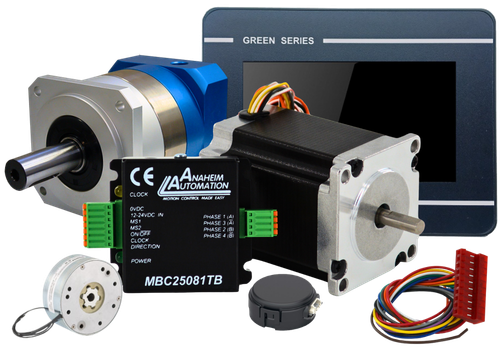
Converting from pneumatic or hydraulic equipment often involves coordinating components from multiple vendors, creating compatibility concerns and increasing development time. Anaheim Automation simplifies the process by providing a comprehensive portfolio of motion control products from a single source, including:
- Servo motors and servo drives
- Integrated servo motor and drive systems
- Stepper motors and drivers
- Brushless DC motors and controllers
- Linear actuators and linear motion components
- Ball screws and linear guides
- Encoders and feedback devices
- HMIs and PLCs
- Planetary gearboxes and accessories
Working with one supplier simplifies procurement, reduces integration challenges, and provides a single point of technical support throughout the project.
Precision Motion Solutions for Better Machine Performance
One of the primary reasons OEMs replace fluid-power systems is to gain greater control over machine performance. Anaheim Automation's servo and integrated motion solutions enable programmable positioning, variable speed control, controlled acceleration and deceleration, closed-loop feedback, exceptional repeatability, and electronic synchronization. These capabilities help manufacturers increase throughput, improve product quality, reduce scrap, and build more flexible production equipment.
Industry 4.0-Ready Automation
Modern manufacturing equipment is expected to provide both motion and data. Anaheim Automation's products integrate with HMIs, PLCs, and industrial communication networks to deliver system diagnostics, alarm monitoring, real-time operating data, predictive maintenance capabilities, remote monitoring, and greater machine visibility. These connected solutions help OEMs develop equipment that supports Industry 4.0 initiatives while improving operational efficiency.
Custom Motion Control Solutions
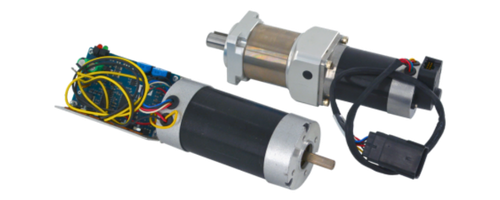
No two automation projects are identical, which is why Anaheim Automation offers extensive customization and value-added services. Whether a project requires custom motor shaft modifications, special windings, unique cable assemblies, integrated motor and drive packages, proprietary programming, footprint-matching solutions, private labeling, custom linear assemblies, or ball screws machined to customer drawings, our engineering team can develop a solution that fits the application's exact requirements. These services reduce engineering effort, accelerate development, and simplify machine integration.
Engineering Support Throughout Your Project
Transitioning to electromechanical motion frequently involves much more than replacing an actuator. Machine sequences, control strategies, and overall system architecture often need to be optimized to achieve the best performance. Anaheim Automation's application engineers provide assistance with system sizing, motion calculations, product selection, integration, prototype development, troubleshooting, and performance optimization, helping customers implement reliable solutions with confidence.
The Future of Industrial Motion Control Is Electric
The industry's shift toward electromechanical motion is not about eliminating hydraulics or pneumatics altogether. Instead, it reflects the increasing demand for machinery that is more efficient, precise, connected, and sustainable. Electric motion systems reduce energy consumption, improve positioning accuracy, require less maintenance, support Industry 4.0 connectivity, and provide cleaner operation than many traditional fluid-power systems.
As servo technology, integrated motion solutions, and linear motion components continue to advance, the adoption of electromechanical systems will only accelerate. Whether you're replacing a pneumatic cylinder, upgrading a hydraulic axis, or designing an entirely new machine, Anaheim Automation offers the products, engineering expertise, and customization capabilities needed to help you successfully modernize your equipment.
Ready to modernize your equipment? Contact Anaheim Automation today to discuss the right electric motion control solution for your application.
FAQs
Can a pneumatic cylinder be replaced with an electric actuator?
Yes, many pneumatic cylinders can be replaced with electric linear actuators or servo-driven motion systems. Electromechanical actuators often provide greater accuracy, programmable motion profiles, and lower long-term operating costs. However, the ideal replacement depends on factors such as force requirements, stroke length, duty cycle, environmental conditions, and speed requirements.
What are the benefits of electromechanical motion control?
Electromechanical motion control systems offer several advantages over pneumatic and hydraulic systems, including:
- Improved energy efficiency
- Greater positioning accuracy and repeatability
- Programmable motion and speed control
- Lower maintenance requirements
- Cleaner operation with no hydraulic fluid leaks
- Easier integration with PLCs, HMIs, and Industry 4.0 technologies
- Enhanced diagnostics and predictive maintenance capabilities
These benefits can improve machine performance while reducing operating and maintenance costs.
Are electric actuators more efficient than hydraulics?
In many applications, yes. Electric actuators generally consume energy only when motion is required, whereas hydraulic systems often require pumps to run continuously to maintain pressure. Electric motion systems also eliminate energy losses associated with hydraulic fluid friction and leakage, helping manufacturers reduce power consumption and improve overall efficiency.
When should hydraulics still be used?
Hydraulic systems remain an excellent solution for applications that require extremely high force or power density, such as:
- Heavy industrial presses
- Construction and mining equipment
- Large lifting systems
- High-tonnage forming machinery
- Heavy-duty injection molding equipment
In many cases, manufacturers adopt hybrid designs that use electromechanical motion for precision axes and hydraulics only where very high forces are required.
How do I convert a pneumatic or hydraulic system to electric motion control?
Converting from fluid power to electric motion typically involves evaluating several application requirements, including:
- Required force or thrust
- Stroke length and travel distance
- Speed and acceleration requirements
- Duty cycle
- Positioning accuracy requirements
- Environmental conditions
- Control and communication requirements
An experienced motion control supplier can help size and select the appropriate motors, actuators, drives, and controls needed for a successful conversion.
What components are required for an electromechanical motion system?
The components required depend on the application, but a typical electromechanical motion control system may include:
- Electric linear actuator or ball screw assembly
- Servo motor, stepper motor, or brushless DC motor
- Motor drive or controller
- Encoder or feedback device
- PLC and HMI for machine control
- Gearbox or mechanical transmission components
- Power supplies and communication interfaces
Many modern systems also incorporate integrated motor and drive solutions to simplify installation and reduce panel space requirements.
Are electric actuators more precise than pneumatic cylinders?
Yes. Electric actuators can achieve highly accurate positioning and repeatable motion through closed-loop feedback systems and programmable controls. Pneumatic cylinders are generally best suited for simple point-to-point motion, while electric actuators excel in applications requiring multiple positions, variable speeds, and precise motion profiles.
Do electric actuators require less maintenance than hydraulic systems?
Generally, yes. Electric actuators eliminate many common hydraulic maintenance concerns, including fluid leaks, seal replacement, hose inspections, and filtration maintenance. They also eliminate many of the air leaks and compressor maintenance issues associated with pneumatic systems, helping reduce downtime and maintenance costs.
What industries are switching to electromechanical motion control?
Industries increasingly adopting electric motion solutions include:
- Packaging and processing equipment
- Material handling and conveyors
- Robotics and collaborative robots
- Medical device manufacturing
- Semiconductor equipment
- Food and beverage processing
- Automated Guided Vehicles (AGVs)
- Autonomous Mobile Robots (AMRs)
- Assembly automation
These industries benefit from the precision, energy efficiency, and connectivity that electromechanical systems provide.
How can Anaheim Automation help with the transition to electric motion control?
Anaheim Automation offers a complete range of motion control products and engineering support to help OEMs and machine builders successfully transition from pneumatic and hydraulic systems to electromechanical solutions. Our team can assist with:
- Application sizing and component selection
- Motion calculations and system design
- Servo, stepper, and brushless motor solutions
- Linear actuators, ball screws, and linear guides
- Encoders, HMIs, and PLC integration
- Custom motion control solutions and value-added services
- Technical support and system optimization
Whether you're replacing a single pneumatic cylinder or redesigning an entire machine platform, Anaheim Automation can help you implement an efficient, reliable, and cost-effective electromechanical motion control solution.