Stepper Motors
Stepper Motors

Anaheim Automation's Stepper Motors product line is the most comprehensive from a single source. The line includes: High-Torque Stepper Motors, "Legacy" round-bodied Stepper Motors, Spur Gear Stepper Motors, Planetary Gear Stepper Motors, Permanent Magnet (PM) Stepper Motors, Permanent Magnet Stepper Gearmotors, Linear Actuator Stepper Motors, and Specialty-Type Stepper Motors, such as 0.9 degree, IP65-Rated, and motors that integrate motor, driver and/or controller in one unit. The Stepper Motor products range from the smallest 08Y Series with 2.5 oz-in of torque, to the largest 42K series with up to 5,700 oz-in of torque. Anaheim Automation can cross other manufacturers, including obsolete products, typically at substantial savings! Options include lead wire configurations, conduit boxes, shaft modifications, encoder, cable and connector adders.


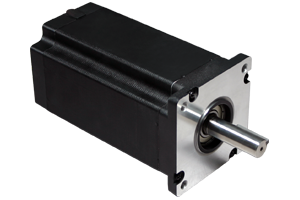
Torque: 2.5 to 5,700 Ounce-Inches
Sizes: NEMA 08, 11, 14, 15, 17, 23, 24, 34 and 42
• 1.8 and 0.9 Degree, Square-Bodied, High-Torque Stepper Motors
• Up to Four Stack Lengths, Several Windings in Each Frame Size
• Four, Six or Eight Lead Wires, Or Conduit Boxes
• Customization and Motor Adders Available
• Drop-In Replacement for Most Competitors, at Huge Savings!
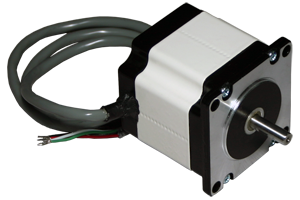
Torque: 40 to 1,575 Ounce-Inches
Sizes: NEMA 23, 34 and 42
• 1.8 Degree, Round-Bodied, "Legacy" Motors
• Up to Three Stack Lengths, Several Windings in Each Frame Size
• Six or Eight Lead Wires, Or Conduit Boxes
• Specials and Motor Adders Available
• Save on Drop-In Replacement of Competitors
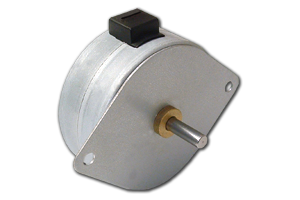
Torque: 1 to 23 Ounce-Inches
Sizes: 15 to 57mm Diameter
• Cost-Effective, Brushless Stepper Motors
• Customization and Motor Adders Available
• Drop-In Replacement for Most Competitors
• Low Prices, Huge Selection
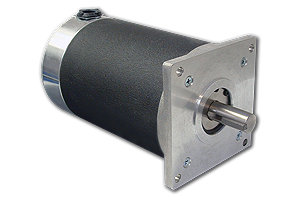
Torque: 35 to 5,700 Ounce-Inches
Sizes: NEMA 17, 23, 34 and 42
• 1.8-Degree, High-Torque Stepper Motors
• Up to Four Stack Lengths, Several Windings in Each Frame Size
• Meets Splash-Proof Requirements
• Made for Harsh or Humid Environments
• Protective Shaft Seal for Longer Life Cycle
Fundamentals of Stepper Motors
  • Stepper Motors - Basics
  • Stepper Motors - Application
  • Stepper Motors - Type
  • Stepper Motors - Modes
  • Stepper Motors - Feedback
  • Stepper Motors - Customization
  • Stepper Motors - Common Causes for Failure
  • Application Note: 15- Axis Wind Tunnel Project
  • Application Note - Stepper Motors
  • Application Note - "Musical Motors" - Stepper Motors and Their Virtuoso Performance!
  • Application Note - Industries That Use Stepper Motors in Their Design
  • Application Note - Stepper Motors
  • Tech Tip - Harnessing the Benefits of Open Loop Systems
Stepper Motors Basics
Stepper Motors Stepper Motors are a digital device. Digital information is processed by the Stepper Motors to accomplish an end result, in this case, controlled motion. One may assume that Stepper Motors will dependably follow digital instructions just as a computer is expected to. This is the distinguishing feature for Stepper motors.

Stepper Motors are an electrical motor that is driven by digital pulses rather than a continuously applied voltage. Inherent in this concept is open-loop control, wherein a train of pulses translates into so many shaft revolutions, with each revolution requiring a given number of pulses. Each pulse equals one rotary increment, or step (hence, Stepper motors), which is only a portion of one complete rotation.

Therefore, counting pulses can be applied in Stepper Motors to achieve a desired amount of shaft rotation. The count automatically represents how much movement has been achieved, without the need for feedback information, as would be the case in servo systems.
Stepper Motors Applications
Although Stepper Motors have been overshadowed in the past by servo systems for motion control, it now is emerging as the preferred technology in more and more areas. The major factor in this trend towards Stepper Motors is the prevalence of digital control, and the emergence of the microprocessor.

Today we have many Stepper Motors applications all around us. Stepper Motors are used in printers (paper feed, print wheel), disk drives, photo-typesetting, X-Y plotters, clocks and watches, factory automation, aircraft controls, and many other applications. The ingenuity and further advances in digital technology from researchers will continue to extend the list of applications in which Stepper Motors will be used.
Stepper Motors Type
Stepper Motors Type There are three basic types of Stepper Motors. The Stepper Motors types vary by construction and in how they function. Each of these types of Stepper Motors offers a solution to an application in a different way. The three basic types of Stepper Motors include the Variable Reluctance, Permanent Magnet, and Hybrid.

Variable Reluctance (VR) Stepper Motors
Variable Reluctance Stepper Motors are known for having soft iron multiple rotor and a wound stator. The Variable Reluctance Stepper Motors generally operate in step angles from 5 to 15 degrees at relatively high step rates. They also possess no detent torque. In Figure 5, when phase A is energized, four rotor teeth line up with the four stator teeth of phase A by magnetic attraction. The next step is taken when A is turned off and phase B is energized, rotating the rotor clockwise 15 degrees; Continuing the sequence, C is turned on next and then A again. Counter clockwise rotation is achieved when the phase order is reversed.

Permanent Magnet (PM) Stepper Motors
Permanent Magnet Stepper Motors differ from Variable Reluctance Stepper Motors by having permanent magnet rotors with no teeth. These rotors are magnetized perpendicular to the axis. When the four phases are energized in sequence, the rotor rotates as it is attracted to the magnetic poles. The motor shown in Figure 6 will take 90 degree steps as the windings are energized in sequence ABCD. Permanent Magnet Stepper Motors generally have step angles of 45 to 90 degrees and tend to step at relatively low rates, but produce high torque and excellent damping characteristics.

Hybrid Stepper Motors
Hybrid Stepper Motors combine qualities from the permanent magnet and variable reluctance Stepper Motors. The Hybrid Stepper Motors have some of the desirable features of each. These Stepper Motors have a high detent torque, excellent holding and dynamic torque, and they can operate in high Stepper speeds. Step angles of 0.9 to 5.0 degrees are normally seen in Hybrid Stepper Motors. Bi-filar windings are generally supplied to these Stepper Motors so a single power supply can be used to power the Stepper Motors. The rotor will rotate in increments of 1.8 degrees if the phases are energized one at a time in the order they are indicated at. These Stepper Motors can be driven in two phases at a time to yield more torque. Hybrid Stepper Motors can also be driven by one then two then one phase to produce half steps of 0.9 degree increments.
Stepper Motors Mode
There are three excitation modes that are commonly used with Stepper Motors. The Stepper Motors modes are the full-step, half-step- and micro-step.

Stepper Motors - Full-Step
In full step operation, Stepper Motors step through the normal step angle e.g. 200 step/revolution motors take 1.8 steps while in half step operation, 0.9 steps are taken. There are two kinds of full-step modes. Single phase full-step excitation is where Stepper Motors are operated with only one phase energized at-a-time. This mode should only be used where torque and speed performance are not important, e.g. where the motor is operated at a fixed speed and load conditions are well defined. Problems with resonance can prohibit operation at some speeds. This type of mode requires the least amount of power from the drive power supply of any of the excitation modes. Dual phase full-step excitation is where the Stepper Motors are operated with two phases energized at-a-time. This mode provides good torque and speed performance with a minimum of resonance problems. Dual excitation, provides about 30 to 40 percent more torque than single excitation, but does require twice the power from the drive power supply.

Stepper Motors - Half-Step
Stepper Motors have half-step excitation which is alternate single and dual phase operation resulting in steps one half the normal step size. This mode provides twice the resolution. While the motor torque output varies on alternate steps, this is more than offset by the need to step through only half the angle. This mode has become the predominately used mode by Anaheim Automation because it offers almost complete freedom from resonance problems. Stepper Motors can be operated over a wide range of speeds and used to drive almost any load commonly encountered.

Stepper Motors - Micro-Step
In Stepper Motors micro-step mode, a Stepper Motor's natural step angle can be divided into much smaller angles. For example, a standard 1.8 degree motor has 200 steps/revolution. If the motor is micro-stepped with a 'divide-by-10', then each micro-step would move the motor 0.18 degrees and there would be 2,000 steps/revolution. Typically, micro-step modes range from divide-by-10 to divide-by-256 (51,200 steps/rev for a 1.8 degree motor). The micro-steps are produced by proportioning the current in the two windings according to sine and cosine functions. This mode is only used where smoother motion or more resolution is required.
Stepper Motors Feedback
Stepper Motors Feedback Stepper Motors are typically controlled by a driver and indexer. The amount, speed, and direction of rotation of Stepper Motors are determined by the right configuration of digital control devices. The main types of control devices for Stepper Motors are: Stepper Motors Drivers, Stepper Motors Control Links, and Stepper Motors Controllers. These devices are set up in figure 8. The Stepper Driver accepts the clock pulses and direction signals and translates these signals into appropriate phase currents for the Stepper Motor. The Stepper Indexer creates the clock pulses and the direction signals for the Stepper Motors. The computer or PLC (Programmable Logic Controller) sends out commands to the indexer.
Stepper Motors Customization
Anaheim Automation offers a variety of options to customize Stepper Motors. The list of modifications includes, but is not limited to: shaft, brake, oil seal for an IP65 rating, mounting dimensions, speed, torque, and voltage. Please give Anaheim Automation a call for any custom applications using Stepper Motors.
Stepper Motors Common Causes for Failure
Common Causes for Stepper Motors and/or Stepper Driver Failure
NOTE: Always read the specification sheet/user's guide that accompanies each product

Problem: Intermittent or erratic stepper motors or drivers function.
Solution: This is the most common cause of failure and one of the most difficult to detect. Start by checking to insure that all connections are tight between stepper motors and drivers. Evidence of discoloration at the terminals/connections, may indicate a loose connection. When replacing a stepper motor, driver or Driver Pack in a motion control system, be sure to inspect all terminal blocks and connectors. Check cabling/wiring for accuracy. Stress stepper motor wiring and connections for worse conditions and check with an ohmmeter.

Problem: Stepper motor wires were disconnected while the driver was powered up.
Solution: Avoid performing any service to the stepper motors or drivers while the power is on, especially in regard to motor connections. This precaution is imperative for both the driver, as well as the technician/installer.

Problem: Poor system performance.
Solution: Check to see if the wire/cables are too long. Keep wire/cable to the stepper motors under 25 feet in length. For applications where the wiring from the stepper motors to the stepper drivers exceeds 25 feet, please contact the factory for instructions, as it is likely that transient voltage protection devices will be required. Another possibility is that the stepper motor lead wires are of a gauge that is too small. Do not match your cable wires to the gauge size the stepper motor lead wires. Anaheim Automation suggests using a shielded cable for such wiring (purchased separately). Additionally, check the age of your stepper motor, as with time and use, stepper motors lose some of their magnetism which affects performance. Typically one can expect 10,000 operating hours for stepper motors (approximately 4.8 years, running one eight-hour shift per work day). Also, make certain that your stepper motor and driver combination is a good match for your application. Contact the factory, should you have any concerns.

Problem: The stepper motor has a shorted winding or a short to the motor case.
Solution: It is likely that you have a defective stepper motor. Do not attempt to repair motors. Opening the stepper motor case may de-magnetize the motor, causing poor performance. Opening of the stepper motor case will also void your warranty. The motor windings can be tested with an ohmmeter. As a rule of thumb, if the stepper motor is a frame size of NEMA 08, 11, 14, 15, 17, 23, or 34 and the warranty period has expired, it is not cost-effective to return these stepper motors for repair. Call the factory if your suspect a defective stepper motor that is still under warranty, or if it is a NEMA size 42 or a K-series motor.

Problem: The stepper motor driver or Driver Pack is over-heating.
Solution: Ventilation and cooling accommodations are essential - failure to provide adequate airflow will affect the stepper motor driver's performance and will shorten the life of the driver. Keep driver temperatures below 60 degrees Celsius. To maintain good airflow, use fans, heat sink material, and base plates, so not to exceed the maximum temperature rating of the stepper motors, drivers or controllers. Be mindful of temperatures inside cabinets and enclosures where stepper drivers may be mounted.

Problem: Environmental factors are less than ideal.
Solution: Environmental factors, such as welding, chemical vapors, moisture, humidity, dust, etc., can damage both the electronics and the stepper motors. Protect drivers, controllers and stepper motors from environments that are corrosive, contain voltage spikes, or prevent good ventilation. Anaheim Automation offers products in several line voltage ranges. For AC lines that contain voltage spikes, a line regulator (filter) will likely be required.

Problem: Pulse rates (Clock or Step) to the driver are too high.
Solution: The typical half-step driver can drive stepper motors at a maximum rate of 20,000 pulse per second. Pulse rates of above 60,000 pulses per second can damage the driver. See individual specification sheets for the motor and driver combination for best performance.

Problem: The stepper motor is stalling.
Solution: In some cases, stalling the motor causes a large voltage spike that often damages the phase transistors on the driver. Some drivers are designed to protect itself from such an occurrence. If not, Transient Suppression Devices can be added externally. Consult the factory for further information.

Problem: The stepper motor is back-driving the driver.
Solution: A stepper motor that is being turned by a load creates a back EMF voltage on the driver. Higher speeds will produce higher voltage levels. If the rotational speed gets very high, this voltage might cause damage to the driver. This is especially dangerous when the motor is back-driven while the driver is still on. Put a mechanical stop or brake in applications that might be subject to these phenomena.

General Safety Considerations for Stepper Motor Applications

The following safety considerations must be observed during all phases of operation, service and repair. Failure to comply with these precautions violates safety standards of design, manufacture, and intended use of stepper motors, drivers and controllers. Anaheim Automation, Inc. assumes no liability for the customer's failure to comply with these requirements. Even well built products, operated or installed improperly, can be hazardous. Safety precautions must be observed by the user with respect to the load and operating environment. The customer is responsible for proper selection, installation and operation of the products purchased from Anaheim Automation, Inc.

• Use caution when handling, testing, and adjusting during installation, set-up and operation • Service should not be performed with power applied • Exposed circuitry should be properly guarded or enclosed to prevent unauthorized human contact with live circuitry • All products should be securely mounted and adequately grounded • Provide adequate air flow and heat dissipation • Do not operate in the presence of flammable gases, vapors, liquids or dust

NOTE: Please Use a RMA Form should you need to return a product for REPAIR. This form can be found in Support, Forms, RMA Request on this web site.
Application Note: 15- Axis Wind Tunnel Project
One of Anaheim Automation Inc.'s customers provides services and products for the automobile industry, such as process automation, prototyping, engine test standards, and gauging equipment. At one point, our customer encountered a problem; popular cars were being redesigned, and they needed computer control of stepper motors for their project. They had tried several other motion control manufacturers before deciding to have Anaheim Automation help them with their project. The project dealt with the cooling of an engine in a strange area. Anaheim Automation's assignment was to construct a prototype that would scoop air from beneath the car and redirect maximum air flow to this area.

It was almost impossible to predict an accurate shape that would allow precise airflow, due to the fact that in order to fit in the available space, the duct had to be in an extremely complex configuration. The solution to this problem involved making a flexible duct that, by moving its parts, allowed it to be reshaped. The duct would be mounted in a wind tunnel, and installed in the prototype of the car. Next, engineers experimented with the duct's shape until they discovered what shape allowed for the best air flow. This shape became the basic model to construct in the overall prototype.

Anaheim Automation needed to shape the duct without diverting from the project goal, and therefore needed 15 axes of motion and one easy-to-use controller. To meet this necessity, Anaheim Automation assembled five triple-axis stepper motor drivers, programmable indexers, an interface, and the necessary power supply into a compact package, along with 15 compatible stepper motors.

When the computer was turned on, the program came up, so the system didn't require any knowledge of the computer operation. In addition, it reduced operation to simply answering three questions (prompting the user). The user could change the speed at any time; however, the operator did not need to know anything about base speed, acceleration, or deceleration, because the parameters for optimal motor speed was preloaded with the system program. While operating, the program prompted the operator with, "What axis, how many steps, and which direction?" The user only needed to press the F1 function key to produce the desired motion for the stepper motors to move.

With the experiment in full swing, engineers were able to manipulate the air duct in order to achieve maximum air flow underneath the vehicle. The required motion was easily produced at the press of a button, and the positions could be easily repeated. Ultimately, our customer's engineering staff was able to determine the exact shape of the duct that provided the car with maximum air flow. Simple, low-cost, and extremely efficient stepper motors and drivers provided the solution the customer required.
Application Note - Stepper Motors
Stepper Motors are currently used all around the world for many types of applications. These motors provide as constant power devices. At low rpm's a high torque can be achieved the same cannot be said when the speed is increased. A high torque cannot be achieved at higher rpm's. These motors are great for positioning objects, such as conveyor belts, assembly lines, lathes, laser cutting, grinding and drilling machines, etc.

Stepper motors are ideal for precise positioning. You may have a fixed speed, variable speed, and position control. These motors are able to handle complex positions or movements. These devices offer power and precision in a compact sizes. These motors can take a great load. A good example to show this would be an escalator. Escalators are constantly worked and carry very heavy loads throughout the day. The step motor has to be able to take up to several hundreds of pounds maybe even thousands. The speed of the escalator is constant and never changes no matter how many people are on it.

A different type of application could be an assembly line. This typically requires precise quick and place movements. Most stepper motors are an open loop system, meaning there is no feedback info needed about the position. By keeping track of the input step pulses, the position is known.

Some of the advantages of a stepper motor, but not limited to are:
• Its input pulse is proportional to angle rotation
• If windings are energized at stand sill the motor has full torque
• Different rotation speeds are available since the frequency of input pulses are proportional to the speed.
• It cost less to have open-loop control that responds to digital input pulses
• Precise response time to starting, stopping, and reversing
• No brushes within the motor making it more reliable.


There are three different types of stepper motors to choose from, the variable -reluctance, the permanent-magnet, and last but not least the hybrid step motor. The three all have different qualities for certain applications. Stepper motors have been around for a long time and are currently and will continue to be used throughout the world. No matter what the application will be the step motor will always rise to the occasion.
Application Note - "Musical Motors" - Stepper Motors and Their Virtuoso Performance!
Anaheim Automation's tremendous versatility of control systems is evident in their new program titled, Musical Motors. They have utilized stepper motors, stepper drivers, and stepper controllers to operate at speeds that coincide with musical notes and pitches to produce a number of different tunes. Each tune is performed by simply running the program that converts each music note into a certain step-per-second. All of the different stepper motors are programmed to produce an appropriate pitch based on how many steps-per-second they run, and for how long. Typically played at a trade show, the program provides the element of surprise; most people do not expect to hear music that is being played by stepper motors!
Application Note - Industries That Use Stepper Motors in Their Design
Stepper motors are versatile motion control components that can be applied to several different industries, from entertainment and film, to the business world, to science and medicine.

Aircraft: Stepper motors are frequently used in aircraft instruments, scanning equipment, and sensing devices, such as antennas.

Automotive: SUV's and RV's, as well as some high-end automobiles, use stepper motors to receive telecommunication signals. Stepper motors are also used for cruise control, automated dashboards gauges and electronic window equipment, as well as in automobile factories on their production lines.

Cameras - Filming and Projection: Not only do stepper motors operate filming cameras and projectors, in the entertainment industry, but automatic digital cameras and mobile phone camera modules utilize tiny stepper motors for focusing and zooming functions as well. The security industry also uses stepper motors for zooming, tilting and scanning operations in surveillance and security cameras.

Entertainment and Gaming: Slot machines, lottery machines, raffles, card shufflers, and wheel spinners can all be operated by cost-effective and reliable stepper motors. You can also find stepper motors in stage productions to control curtains and lighting functions, for plays and concerts, as well as seminars and rallies.

Laboratory and Factory Improvements and Upgrades: Stepper motors are employed to perform tedious movements pertaining to mixing chemicals in laboratories, and operating equipment for controlled environmental testing. Stepper motors are used in retrofit kits (stepper motors, drivers, controllers and power supplies) for CNC machine control, factory automation and assembly processes. Stepper motors can also be found in scientific study, used to position observatory telescopes, and in many different types of scientific equipment, i.e. spectrographs, analyzers, and diagnostic machines.

Medical: Stepper motors provide a wide variety of functions for the medical and dental world. Stepper motors are used within medical scanners, multi-axis stepper motor microscopic or nanoscopic motion control of automated devices, auto-injectors, samplers, dispensing pumps, respirators, blood analysis machinery and chromatographs. In the dental industry, stepper motors operate fluid pumps, and are often found inside digital dental photography equipment.

Office Equipment: PC based scanning equipment, optical disk drive head driving mechanisms, bar-code printers, label and box printers, scanners, and data storage drives all utilize stepper motors for their motion control operation.
Application Note - Stepper Motors
Stepper Motors are currently used all around the world for many types of applications. These motors provide as constant power devices. At low rpm's a high torque can be achieved the same cannot be said when the speed is increased. A high torque cannot be achieved at higher rpm's. These motors are great for positioning objects, such as conveyor belts, assembly lines, lathes, laser cutting, grinding and drilling machines, etc.

Stepper motors are ideal for precise positioning. You may have a fixed speed, variable speed, and position control. These motors are able to handle complex positions or movements. These devices offer power and precision in a compact sizes. These motors can take a great load. A good example to show this would be an escalator. Escalators are constantly worked and carry very heavy loads throughout the day. The step motor has to be able to take up to several hundreds of pounds maybe even thousands. The speed of the escalator is constant and never changes no matter how many people are on it.

A different type of application could be an assembly line. This typically requires precise quick and place movements. Most stepper motors are an open loop system, meaning there is no feedback info needed about the position. By keeping track of the input step pulses, the position is known.

Some of the advantages of a stepper motor, but not limited to are:
• Its input pulse is proportional to angle rotation
• If windings are energized at stand sill the motor has full torque
• Different rotation speeds are available since the frequency of input pulses are proportional to the speed.
• It cost less to have open-loop control that responds to digital input pulses
• Precise response time to starting, stopping, and reversing
• No brushes within the motor making it more reliable.

There are three different types of stepper motors to choose from, the variable -reluctance, the permanent-magnet, and last but not least the hybrid step motor. The three all have different qualities for certain applications. Stepper motors have been around for a long time and are currently and will continue to be used throughout the world. No matter what the application will be the step motor will always rise to the occasion.
Tech Tip - Harnessing the Benefits of Open Loop Systems
Stepper motors in open-loop systems can provide accurate, dependable speed and positioning that can equal the best servo performance if installed correctly. Their simplicity allows them to function without tachometers, encoders, or other drawbacks that add to the cost of operation. Proper installation also makes it easy to pinpoint the exact effect of the operation, since they increment a precise amount with each control pulse. Likewise, the rate of control pulses determines motor speed so it too is totally predictable. Therefore, in the right mechanical environment, stepper motor systems can provide whatever degree of accuracy and reliability that is required.

Designing a System:
Stepper motors have several usage benefits over servos, the first being cost. In almost any application, stepper motors can be used at a fraction of the cost of servo. With servo drives, the problem of feedback loop phase shift and instability is common. However, stepper motors are open-loop systems that completely void any potential problem that could arise in this area.

The initial design phase for open-loop systems is similar to that of the servo system. Load characteristics, performance requirements, and mechanical design, including coupling techniques, must be thoroughly considered before a designer can effectively select the best appropriate stepper motor and driver combination for an application.

Once these factors have been determined, the motor specifications and system motion controller, such as a computer or PLC, can be established. Then the design comes down to selecting the suitable driver and controller to produce the motion necessary for the application.

Defining a Driver Pack:
In order to obtain an optimum solution, the following factors must be considered:
1. Begin with the stepper motor(s) and controller you have selected for your application.
2. Make use of one driver for each motor. The driver must match the motor current (amps per phase).
3. Include a power supply that supports the driver(s) and motor(s).
4. Select an interface to handle communications between the control device and the indexer (parallel, RS422, RS232C, serial, PLC, or manual switches).
5. Configure the Driver Pack with items 2 through 4 as applicable, or see Driver Packs on our website.

NOTE: When the wiring from a driver to a stepper motor extends beyond 25 feet, consult Anaheim Automation for additional assistance. Shielded motor cable is available and purchased separately.
© 2010 Anaheim Automation, Inc. - All Rights Reserved