We use cookies to make your experience better. To comply with the new e-Privacy directive, we need to ask for your consent to set the cookies. Learn more.

Stepper Motors
Information
Anaheim Automation stepper motors span NEMA frame sizes 08 to 42, with holding torque from 2.5 to 5,700 oz-in and 1.8° or 0.9° step angles. Select high-torque square, standard round, IP65 sealed, or permanent magnet models, then specify windings, shafts, and accessories to fit your design. Industrial stepper motors suit open-loop positioning in equipment where accuracy and repeatability matter.
Not sure which fits? Reach out for application assistance.
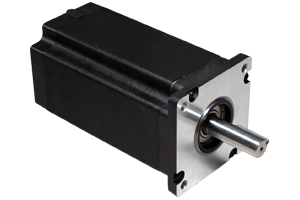
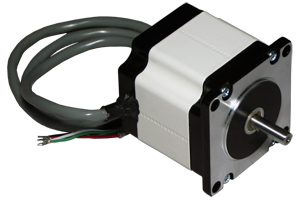
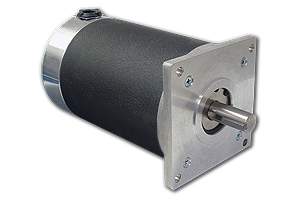
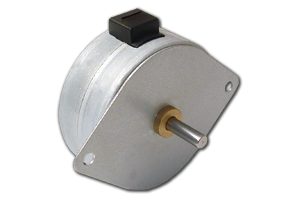
Choose a Stepper Motor Family by Application
Stepper motors move in fixed angular steps, so they suit open-loop positioning where the load is predictable and repeatability matters. Anaheim Automation organizes its line into four families.
- High-torque (square) stepper motors come in NEMA 08 to 42 frames with 1.8° and 0.9° step angles, up to four stack lengths and four, six, or eight lead wires or a conduit box. This is the widest frame range of the four families.
- IP65-rated sealed stepper motors come in NEMA 17, 23, 34, and 42 frames, sealed against dust and low-pressure water jets for damp, dusty, or washdown locations.
- Standard (round) stepper motors come in NEMA 23, 34, and 42 frames with low rotor inertia for high acceleration. They are also the family to check when replacing an existing round-bodied unit.
- Permanent magnet (PM) stepper motors are brushless motors from 15 mm to 57 mm in diameter, for precise motion in a small footprint.
To reduce component count, stepper motors with integrated drivers in NEMA 17, 23, and 34 build the microstep driver and controller electronics into the motor assembly.

Match Frame Size, Torque, and Speed to Your Load
Torque, speed, and frame size decide most stepper motor selections, and they trade off against each other. Work through them against the load before you compare models.
Start with the torque the load requires, then add margin for acceleration and load variation. Holding torque is the maximum torque the shaft can resist while a phase stays energized. It does not describe the torque available while the motor is stepping. Available torque falls as step rate rises. Winding inductance slows the rise of current in each phase, so at higher speeds, the current cannot reach its rated level before the next step. Check the speed-torque curve at your operating speed before you commit to a size.
NEMA frame numbers describe the mounting face in tenths of an inch, so a NEMA 23 motor has a 2.3-inch face. Confirm the shaft and mounting options on the product page for your design.
Step angle is the shaft rotation per full step, so a smaller angle gives finer positioning resolution. A 1.8° motor takes 200 full steps per revolution, and a 0.9° motor takes 400. A microstepping driver divides each step further for smoother low-speed motion. Our Stepper Driver Guide covers driver selection and phase current, and our unit converter helps when specifications arrive in different units.
Large Stepper Motors for Heavier Loads
NEMA 34 and 42 frames carry the most torque in the line, up to 5,700 oz-in. These large stepper motors are available as high-torque square and IP65-sealed versions, with conduit box options on the sealed NEMA 34 and 42 series. Higher torque also means higher phase current, so match the driver to the motor's rated current and confirm the power supply can deliver it.
If the load varies widely or you need to confirm position, add an encoder or consider a servo motor system, which uses closed-loop feedback.

23Y Series NEMA 23 Stepper Motors
The 23Y Series puts high-torque performance in a NEMA 23 frame, with torque up to 425 oz-in, a 1.8° step angle, and winding current from 0.7 to 3.5 A. Eight-lead models can be wired in series, unipolar, or parallel, and options include single or double shafts, encoders, gearboxes, cables, and connectors.

Custom Stepper Motors and Value-Added Options
Custom stepper motors are available with custom windings, shaft modifications, and conduit boxes.
Encoder, brake, gearbox, connector, and cable options are available on request. Ask about ratings above IP65.
Replacing a motor from another manufacturer? Our team can typically cross-reference stepping motors from other makers, including obsolete products. Read more about our custom solutions and value-added services.
Support From First Unit to Production Volume
Design engineers can validate a unit under real-world load and speed conditions, and procurement can plan quantities once the design is approved. Tell us about your application, and our application engineers will help you choose a motor, a compatible driver, and the options that fit. Use the contact form to get started.
Frequently Asked Questions About Stepper Motors
What is the difference between 1.8° and 0.9° stepper motors?
A 1.8° motor takes 200 full steps per revolution. A 0.9° motor takes 400 steps per revolution, which gives finer native resolution. Microstepping can refine either one further.
Do stepper motors need an encoder?
No. Stepper motors run open loop, without position feedback, which works for steady loads at consistent speeds. Add an encoder when you need to confirm position, or move to a servo system when loads or speeds vary.
What does IP65 mean for a stepper motor?
Our IP65 sealed stepper motors are sealed against dust and low-pressure water jets from any direction, often called splash-proof. Contact us if your application needs a higher rating.
When should I use a servo or brushless motor instead?
Consider servo motors or brushless DC motors when your load changes widely, when you need closed-loop control, or when the application needs continuous rotation rather than stepped positioning. Our product guides compare the options in more detail.