We use cookies to make your experience better. To comply with the new e-Privacy directive, we need to ask for your consent to set the cookies. Learn more.

Introducing the NEW MBC20SC1 Stepper Driver/Controller
Oct 2026 Nicole Jones
Presenting the MBC20SC1 Stepper Driver
Designing automated equipment requires a balance of motion performance, integration space, and overall system cost. A motion control solution that combines essential functionality in a compact package can simplify development while maximizing space for additional components.
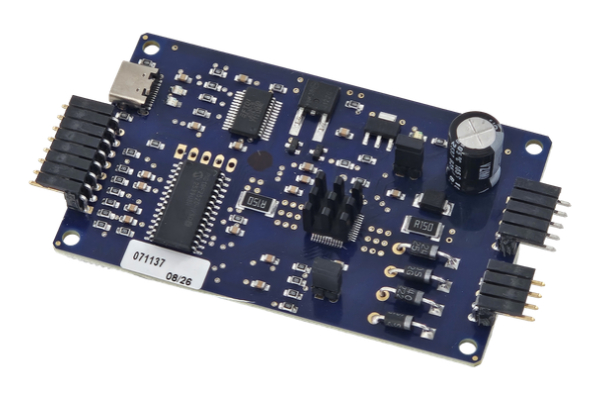
Anaheim Automation's MBC20SC1 Stepper Driver with Programmable Controller combines bipolar microstepping, programmable motion control, and quadrature encoder feedback in a compact, open-frame design with USB connectivity. With configurable motion profiles and onboard program storage, the MBC20SC1 is an excellent option for engineers developing positioning systems, dispensing equipment, packaging machinery, and other applications that require repeatable movement.
What Is the MBC20SC1?
Designed and manufactured at our facility in Anaheim, CA, USA, the MBC20SC1 is a single-axis stepper motor driver with programmable controller functionality. It can control compatible stepper motors through configurable motion commands, allowing engineers to implement movement sequences without necessarily requiring a separate motion controller. The integrated controller communicates with a Windows PC through USB, and its configuration software can be used to adjust operating parameters, execute movements, and save programs to onboard memory for standalone operation. This combination of driver and controller functionality simplifies control architecture.
MBC20SC1 Technical Specifications
The MBC20SC1 supports both programmable operation and direct control through serial communication. Engineers can configure movement parameters and save suitable programs to onboard memory for standalone use. A separate DC power supply is required. Refer to the product documentation for complete electrical specifications, wiring diagrams, and operating requirements.
Key specifications include:
-
Power supply: 12–24 VDC
-
Output current: 0.06–2.0 A per phase
-
Motor type: Bipolar stepper motors
-
Motor wiring: Four-, six-, and eight-lead stepper motors
-
Microstepping resolutions: Full step, 2, 4, 8, 16, 32, 64, 128, and 256 microsteps per full step
-
Encoder feedback: Quadrature incremental encoder input with autocorrection capability
-
Motion configuration: Adjustable starting speed, running speed, acceleration, and deceleration
-
Positioning: Relative and absolute positioning commands
-
Programming: Configurable motion commands and onboard program storage
-
Communication: USB interface with serial communication
-
Protection: Built-in overtemperature shutdown and short-circuit protection
-
Dimensions: Approximately 3.25 × 2 × 0.573 inches
Five Benefits for OEMs and Design Engineers
Example Applications for the MBC20SC1
The MBC20SC1 is an excellent option for many systems where programmable single-axis motion in needed. The following examples illustrate where its capabilities may be useful.
Point-to-Point Motion Systems
Automated equipment often needs to move between predefined positions or repeat a motion sequence at a controlled speed.
Potential applications include:
-
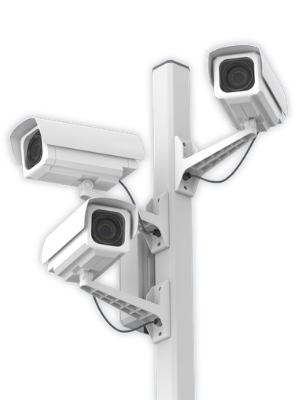
Automated security cameras: Move a camera back and forth between defined positions using programmed motion sequences.
-
Linear motion systems: Control compatible rails, screw-driven actuators, and positioning mechanisms that travel specified distances.
-
Inspection equipment: Position a sensor or camera at repeatable locations.
-
Indexing mechanisms: Move components between stations during an automated process.
Programmable movement and encoder feedback can be useful when a mechanism must repeatedly reach defined positions. For linear systems, engineers should also account for screw lead, belt ratio, load, travel distance, acceleration, and required torque.
Dispensers, Pumps, and Valves
Dispensing equipment often requires a motor to rotate a mechanism by a specified amount or move through a repeatable sequence.
Potential applications include:
-
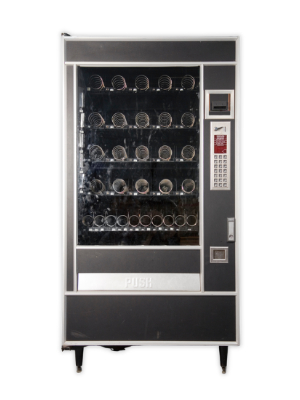
Vending and product-dispensing mechanisms
-
Sticker and label dispensers
-
Motorized metering systems
-
Stepper-driven pump mechanisms
-
Motor-operated valves with defined positioning requirements
Programmable indexing can help control the movement associated with dispensing or fluid handling. However, commanded motor movement does not automatically guarantee a specific delivered volume. Actual dispensing accuracy depends on the pump or valve design, calibration, fluid properties, mechanical tolerances, and any additional feedback used by the system.
Packaging and Labeling Machinery
Packaging lines frequently rely on repeated movements to position materials and products.
The MBC20SC1 may be suitable for individual mechanisms such as:
-
Product feed systems
-
Label indexing mechanisms
-
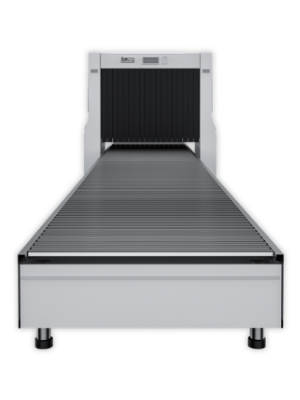
Conveyor cutoff positioning
-
Packaging material advancement
-
Motorized sealing mechanisms
Its small footprint can be valuable when motion control components must fit within a compact machine assembly. For high-speed production lines or applications involving coordinated multiple axes, engineers should verify that the controller's functionality and timing meet the requirements of the overall machine.
Design Aspects to Consider Before Selecting a Stepper Controller
Before integrating the MBC20SC1 into a design, engineers should evaluate several application-specific factors.
- Motor sizing: Confirm that the motor can supply the torque required throughout the operating speed range, including acceleration and deceleration.
- Current requirements: Match the driver settings to the motor's electrical specifications and the application's thermal requirements.
- Positioning performance: Evaluate the required travel distance, resolution, repeatability, and allowable positioning error.
- Encoder compatibility: Confirm that the encoder's electrical interface and output signals are compatible with the controller.
- Mechanical transmission: Account for screw lead, gearing, belt ratios, backlash, friction, and load inertia where applicable.
- Control architecture: Determine whether standalone programmed movement or serial commands from a host system best suit the application.
- Environmental conditions: Consider enclosure space, ventilation, operating temperature, electrical noise, and vibration.
Addressing these factors early can help engineers develop a motion control system that meets the application's functional requirements without unnecessary complexity.
Explore the MBC20SC1
Anaheim Automation provides motion control components for OEMs and design engineers developing automation equipment across a range of industries. The MBC20SC1 combines a compact form factor, configurable stepper control, and quadrature encoder feedback in a single-axis solution for suitable positioning and automation applications. Explore the MBC20SC1 product page for specifications, downloadable documentation, and additional product information.
Have questions about motor compatibility, motion requirements, or system integration? Contact Anaheim Automation to discuss your application and identify components that fit your design needs.